Several people have been telling for some time now to do a history podcast. Well, it exists now. Interesting Times is about obscure, weird, and out-of-the-way historical bits that you might not have heard of. There’s not going to be any grand histories of Rome or WWII here. Mainly, it’s going to be weird stuff that I think is cool. I’ll be updating every Thursday.
Author Archive
Free Wolverine Ideas!
In Comic Books on October 15, 2014 at 9:06 amMarvel comics is going to kill Wolverine. Wow! That is a really big deal. He’ll come back, though. This is comics. People come back. Wolverine will probably just take a really, really, really, really long time doing his healing factor and then be like “Hi guys, I got better.” Knowing what to do with a character when they come back to life can be hard. Like, they just died! How do you top that? What new adventures can they have? It is difficult to think of things!

This is a real Wolverine! It does not have an adamantium skeleton.
To help Marvel out, I’ve decided to post my Free Wolverine Ideas. You guys can just go ahead and use these, okay? Okay. Here goes:
-Wolverine insists that all Canadians say “bub.” Northstar says “I don’t say ‘bub'” and then Wolverine says “Well, maybe it’s an Alberta thing” and Northstar says “You’re from Alberta?”
-An issue just like Hawkeye’s Pizza Dog issue, except from the perspective of Wolverine’s hair.
-Wolverine and Cyclops get drunk at the Hellfire Club and then get into an argument about metric versus imperial units. It gets heated, they start fighting and then there’s a quiet moment where they lock eyes and say “None of this will bring Jean back!” (Oh yeah: Jean Grey is dead in this story) They look at each other and then both get really sad and then hug.
-Wolverine tries to start a hockey team at the Xavier school. Only Beak shows up.
-Storm says that she’s really proud of Wolverine for quitting smoking. Wolverine says that it wasn’t that hard, just took a bit of willpower, but Storm knows better and is still really proud of him.
-The Xavier School has a World Cultures Fair and Wolverine makes poutine. Jubilee says that it’s really good poutine and Wolverine is all like “I’m the best there is at what I do.”
-Colossus and Wolverine start a craft brewery at the Xavier school. Colossus wants to make a Russian style stout. Wolverine’s more into lagers. Nightcrawler says that he had a really good kolsch the other day.
-Wolverine reminds everybody that the US tried to invade Canada once and it didn’t work out too well. “Wait, that happened?” says Rogue. “Yeah, exactly,” says Wolverine.
-X-23 and Daken hang out at the school during Bring Your Kid to Work Day. Iceman and Daken don’t get along. X-23 and Kitty Pryde have a rousing game of squash.
-Emma Frost and Wolverine get into an argument about the central message of Hemingway’s A Farewell to Arms. Wolverine is like “I met Hemingway! I am over one hundred years old and fought in World War One!” and Emma Frost is like “It doesn’t matter, authorial intent is irrelevant!”
That should be enough for a few issues after Wolverine comes back, and I look forward to seeing Marvel running with these ideas in another year or so. Wolverine, guys! He’s a cool dude. SNIKT!
D&D Will Kill You: That One Alarmist Comic is a Movie Now
In Games, Movies, Religion on August 27, 2014 at 3:15 pmIf anyone sits down and watches Reefer Madness nowadays, chances are they’re probably stoned. The 1936 anti-marijuana movie, if it’s viewed at all, is generally only watched by aficionados of the very substance that it’s attempting to decry, viewers reveling in retro irony.
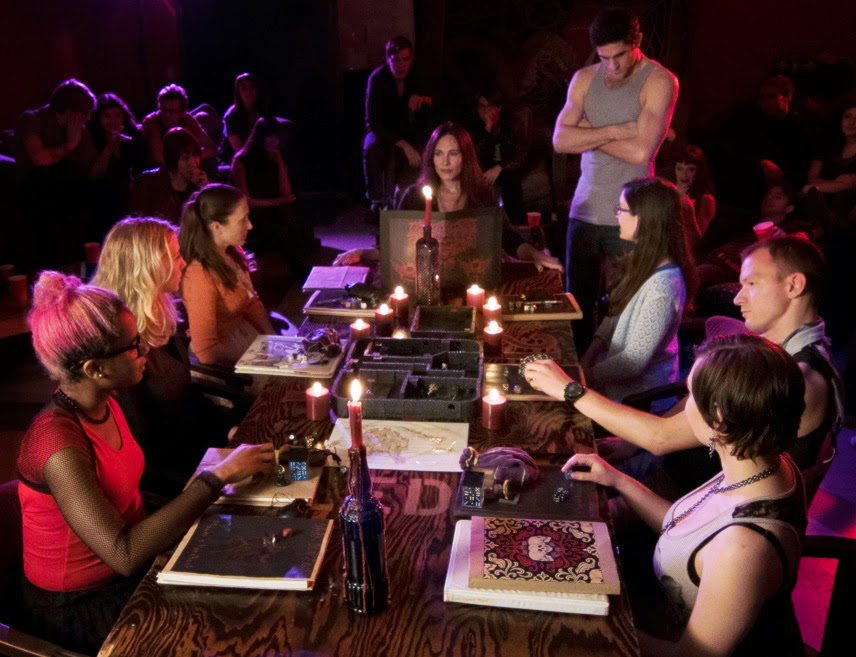
Pictured: Game night at my place, every Tuesday
Dark Dungeons, a forty-minute film released earlier this month, calls back to Reefer Madness’ unintentional kitsch by being a faithful adaptation of one of the most infamous religious comics ever made. You’ve probably been handed a Jack Chick Tract at some point. The small, black-and-white comics handed out by street preachers and self-appointed missionaries warn of hell and damnation for listening to rock music, doing drugs, being a member of the Catholic church, and, memorably, playing Dungeons and Dragons. The Dark Dungeons comic is a tiny screed against fantasy roleplaying games. According to Chick, if you roll dice and pretend to be an elf you’re on your way to dealing with black magic, worshipping Satan, and killing yourself. The only way out is to trust Jesus and burn your fantasy novels. Really. Read the comic. It ends with a book burning.
The short screed is very much a product of its time. Heavy metal, Satanism, dark magic(k) and imagined occult conspiracies were a persistent bugbear of the 1970s and 80s. Bands bedecked themselves in “Satanic” imagery in order to look edgy, and Beatrice Sparks (the literary charlatan behind Go Ask Alice) “discovered” a (fake) diary about a kid who’d supposedly gotten involved with the occult. Dungeons and Dragons, a game where kids pretended to be magical people who cast magic and sometimes worshipped fictional gods, was the source of a healthy amount of pearl-clutching, and Dark Dungeons is the apex/nadir of all of the hype and hoopla of that era.
Two things happened, though, that soon destroyed America’s obsession with the dangerous, imagined occult. The first is that grunge and gangsta rap unseated pentagram-strewn hair metal as the dangerous genre du jour. Soon, being edgy wasn’t about invoking demons or screaming about hell. Being transgressive was about drive bys, drugs, and not giving a shit. By the middle nineties, the panic over kids worshipping Satan seemed ridiculous.
The second thing (related to the first) is that popular culture gradually realized that people who are obsessed with demons and elves are fucking dorks.
This wasn’t exactly a secret or a revelation, of course. This is Spinal Tap is all about how metalheads who sing about Stonehenge are sort of doofy, and even if more genuinely dangerous music hadn’t showed up, the whole metal/occult/Satan thing would have probably drowned in its own excess anyway. Anymore, bands that steep themselves in sword and sorcery type imagery do so in such a way that acknowledge their inherent ridiculousness. Any pretense of actual edge takes a back seat to deliberate kitsch.
The point is, a cultural wave that was previously perceived as dangerous very quickly turned into a source of ridicule, and the shocked masses of that era look not so much like they are clutching at pearls, but straws.
The Dark Dungeons film does not need to be a spoof of 70s and 80s moral panic. In fact, it is officially licensed by Jack Chick, and every single line of dialogue from the comic makes it into the movie. Make no mistake, the folks who made this movie are a bunch of gaming dorks with cameras who completely disagree with the source material, but the filmmakers are smart enough to know that they don’t need to wink at the audience very much, if at all. Chick’s words and ideas about how D&D will lead to demon-summoning and suicide are their own, best counter-argument. The movie isn’t a masterpiece (there’s some Cthulhu stuff in there that feels sort of forced) but does work as a sort of reverse-engineered Reefer Madness. The only people who are ever going to watch it are dorks like me, but when I saw it I got a bit of nostalgia for a time that, admittedly, I was a bit too young to take part in.
I looked around at the other gaming people in the room and thought. “Hey guys, remember when the preachers and moms were afraid of us? Remember when we were dangerous? That was kind of fucking cool.”
In Which I Watch Soccer and Greatly Enjoy It
In Athletics on June 23, 2014 at 8:22 amUntil yesterday I had played, but never watched, soccer. Like several other kids growing up in the 80s I was part of a parks and rec league, and when I lived in the hippie theme park that is also sometimes called Eugene, Oregon I played the game with my Ultimate Frisbee team when we weren’t playing Ultimate Frisbee. So, I’d kicked balls plenty. I’d run around plenty. I knew the basics of the game, but I’d never been a fan. Yesterday I watched my first soccer game. I watched the US take on Portugal and play to a tragic, last-minute draw. It was amazing, invigorating, and I think I might be a soccer fan now. A few observations:
-Soccer’s low-scoring nature is a feature, not a bug. When the ball does finally go in, it’s either a triumph or tragedy, depending on circumstances, and every single goal matters. When the ball grazes near the goal an air of suspense (either for something good or bad) takes over the watcher and soccer, moreso than many other sports, becomes a game of suspense.
-I saw the US game in a soccer bar and unironically chanting “U-S-A, U-S-A” with a collection of strangers after a goal is, dare I say it, fun. It’s always fun to be part of something larger than yourself. The cynical part of me knows that that feeling is also where nationalism and all of its ugliness comes from, but it’s great in a contained space.
-It’s kind of great to see the US as the underdog. We win at all kinds of things on a regular basis like, you know, Cold Wars and defeating facism and going to the moon. Being in a position where the US is just one team among many and really has to earn its seat at the table is new, interesting, and probably mentally good for a country which tends to be fairly arrogant about basically everything.
-Soccer players are really, really handsome. These are guys who run around all the time, so naturally they’re fit, and they’re not bulky like football players or gangly like basketball players. They’re toned, proportional, and tend to have fashionable haircuts. They are by far the most good-looking of sports guys.
-The World Cup’s ranking system is interesting. Instead of being knocked out of a game due to a loss, teams advancement or nonadvancement depends on their relative status within a group. That seems like a far more dynamic way to rank and quantify teams than just single elimination.
-Soccer scarves make fans look like Harry Potters or Doctor Whos and I’m fine with that.
-Given how great watching soccer can be I’m now extra-distraught that FIFA is kind of evil.
-Seeing a team you support tie is weird. I’m used to watching teams I like win or lose, but when I saw the US tie I really didn’t know what to think. It was new and weird and a fairly interesting emotional place to be.
-I really want to go to a Portland Timbers game now.
I will definitely be watching again, and will probably feel appropriately crushed when the US inevitably loses. In the meantime, I’ll be squinting at 538’s World Cup coverage and hoping that the improbable happens.
Theater Geek Karaoke
In Portland, Theater on June 12, 2014 at 12:07 pmThis past Sunday I found myself portraying Frank Hardy in a short play called The Hardy Boys and the Mystery of Where Babies Come From. I had never heard of this play until about an hour before I was on stage, and during performance I and the three other actors had to read from scripts. We had no sets, virtually no props, and had not rehearsed in any meaningful way. It was loads of fun.
Play|Date is a new project from the Misfit Academy and is hosted by The Steep and Thorny Way to Heaven, a small venue in Portland’s SE Industrial District, and it can best be thought of as dramatic karaoke. Participants have a list of short plays they can choose from, put in their names and, just like at a karaoke they’re called up to the stage to read through the scene with other performers.
Unlike other art events, it’s participatory. Portland has no shortage of plays, concerts, comedy shows, gallery openings, or the like, but there are far fewer arts events that encourage the general public to make art or actually flex their artistic muscles. They do exist, but not in numbers. Play|Date offers depth to the Portland art scene by expanding the field of who can do art and be a performer. It’s a catalyst for creation. I know that sounds sort of hokey, but it’s true.
Just like how karaoke isn’t a concert, Play|Date isn’t an actual performance. However, there’s a certain pleasure to seeing average people sing at karaoke, and there’s also a specific enjoyment that one can get from seeing unrehearsed nonactors read through a scene. You’re watching other humans, just like you, spontaneously attempt to make art. Having an active, vibrant, and interesting art scene in this town can mean more than just having a lot of good performance spaces. It also can mean that this is a place where people (you, me, everyone) can actually go places and attempt, just a little, to create.
The Legend of Polybius. Now on YouTube!
In History, Mythology, Portland, Video Games on May 23, 2014 at 10:26 amJust today I found out that someone put my Polybius talk on Youtube. So, if you want to watch me talk about a killer fake video game, here it is.
More Shows Like Gotham That Fox Can Do!
In Comic Books, Television on May 6, 2014 at 10:55 amFox recently announced Gotham, a Batman show that does not have Batman in it. In that show, Batman and Penguin and Catwoman will be kids, and all of the cool crime-fighting and crime-doing will be done by other people. It’s all of your favorite things about Batman, kind of! I think it’s a great idea for a show. Here are some other shows that Fox can do:
Westchester
Scotty summers and his brother Alex like to hang out with their friends Jean, Bobby and Hank. They play pirates sometimes. Every so often they go over to their friend Warren’s house. Warren’s house is really big, and it has a lot of rooms where they can play pirates. Every so often the TV news says something about “mutants.” Scotty and his friends don’t know what mutants are because they are small children.
Krypton
Jor-El is a respected scientist who does science things at the University of Science on Krypton. Lots of other people don’t like his science. Jor-El thinks bad things will happen. “Nah,” say the bad guys, “bad things won’t happen.” This goes on for eight seasons, and in the last episode Jor-El’s planet explodes.
Rogers
Steve Rogers is a short, underweight guy during WWII. He really wants to be a soldier, but he can’t because he is small. This is the plot of every episode for all seven season of the show, which lasts longer than actual WWII.
Paradise Island
Princess Diana and her friends grow up together on Paradise Island, which is a nice place. Every so often the adults fight cyclops’ and minotaurs, but Princess Diana and her friends don’t. They are kids and they stay at home during the monster fighting. Sometimes Princess Diana thinks about leaving the island, but then she doesn’t.
Air Jordan
Hal Jordan is a guy who wants to be a pilot. (See? You thought the title was about basketball, but it wasn’t!) He goes to airplane school, and in later seasons he becomes a real, actual pilot. The entire show is about airplanes. In the last scene of the last episode of season nine Hal Jordan gets a weird ring. He says “In brightest day…” and then the credits roll and then the show is over forever.
Stark
Tony Stark is a wealthy guy who likes to drink wine and date ladies. He is also secretly unhappy. Every so often, for six seasons, he looks wistfully at a robot arm.
Speedster
Barry “Speedster” Allen is a high school cross country runner, except in the spring when he’s a high school track and field runner. Barry Allen likes running. He has a coach and teammates. They are teenagers and the show is about how much they enjoy running together.
Those are my ideas for shows! Superheroes!
In Which I Find Plagiarism in a Portland History Book
In History, Portland, Writing on February 5, 2014 at 8:18 amPlagiarism is one of the worst things that a writer can be accused of doing. This is not simply because it is an act of theft (though it is precisely that) but also because it reveals a certain intellectual bankruptcy on the part of the offender. A plagiarist does not interpret, analyze, or even bring new personality to what they’re purportedly writing about. They do not provide a unique voice, interpretation, or perspective. They do not, to borrow a pop business term, add value.
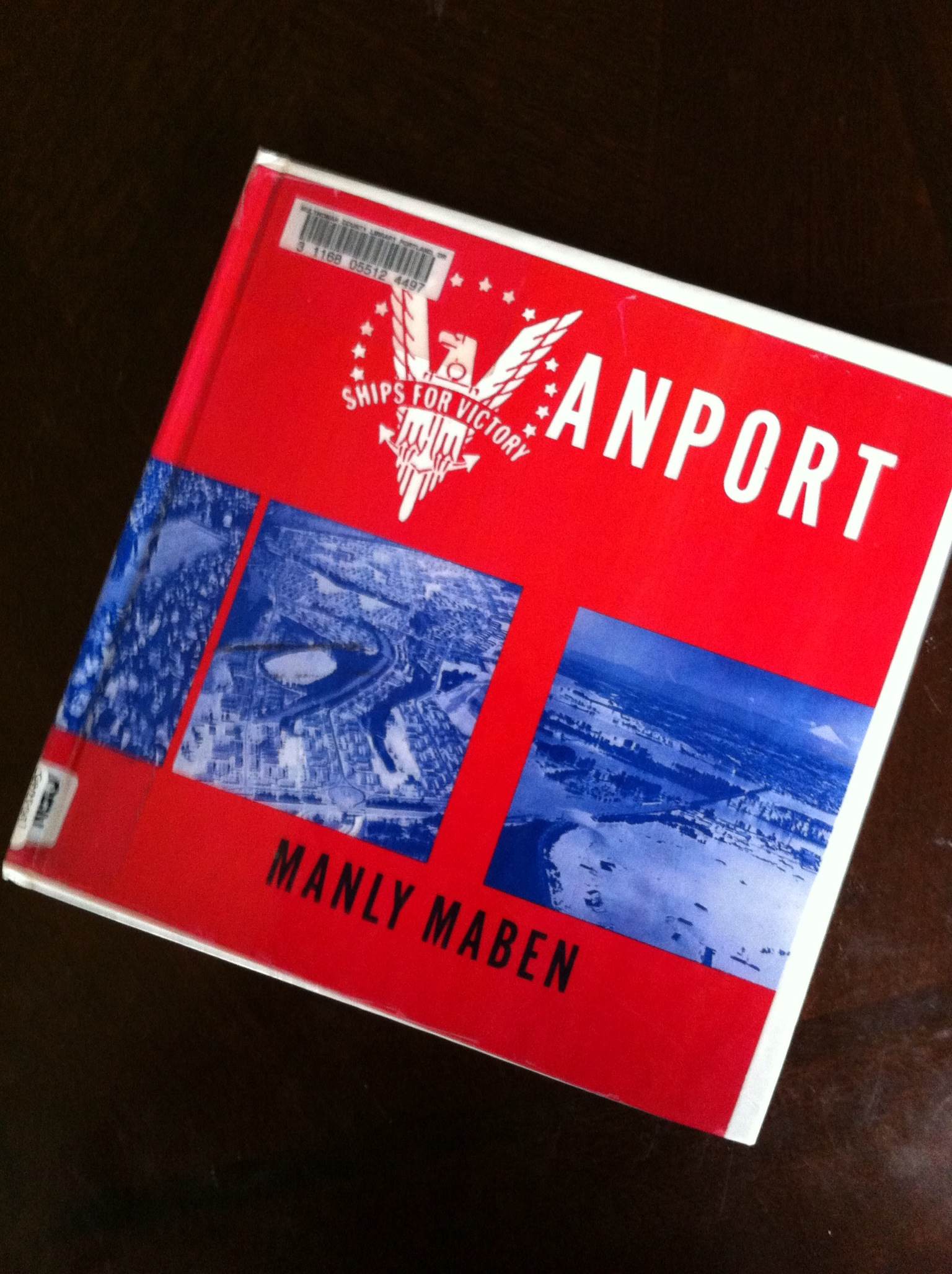
Earlier this week I found out that a local author copied another, earlier book. I was at the Multnomah County Library looking at secondary sources for an upcoming feature on Vanport, and I cracked open this book for obvious reasons:
 Because Vanport was in North Portland, I figured that some of the regional neighborhood publications could also be handy. Maybe there were stories or citations in those that would provide interesting details or dramatic first-person accounts, or just a different spin or viewpoint that would be worth looking at. I grabbed a few of them, including this one:
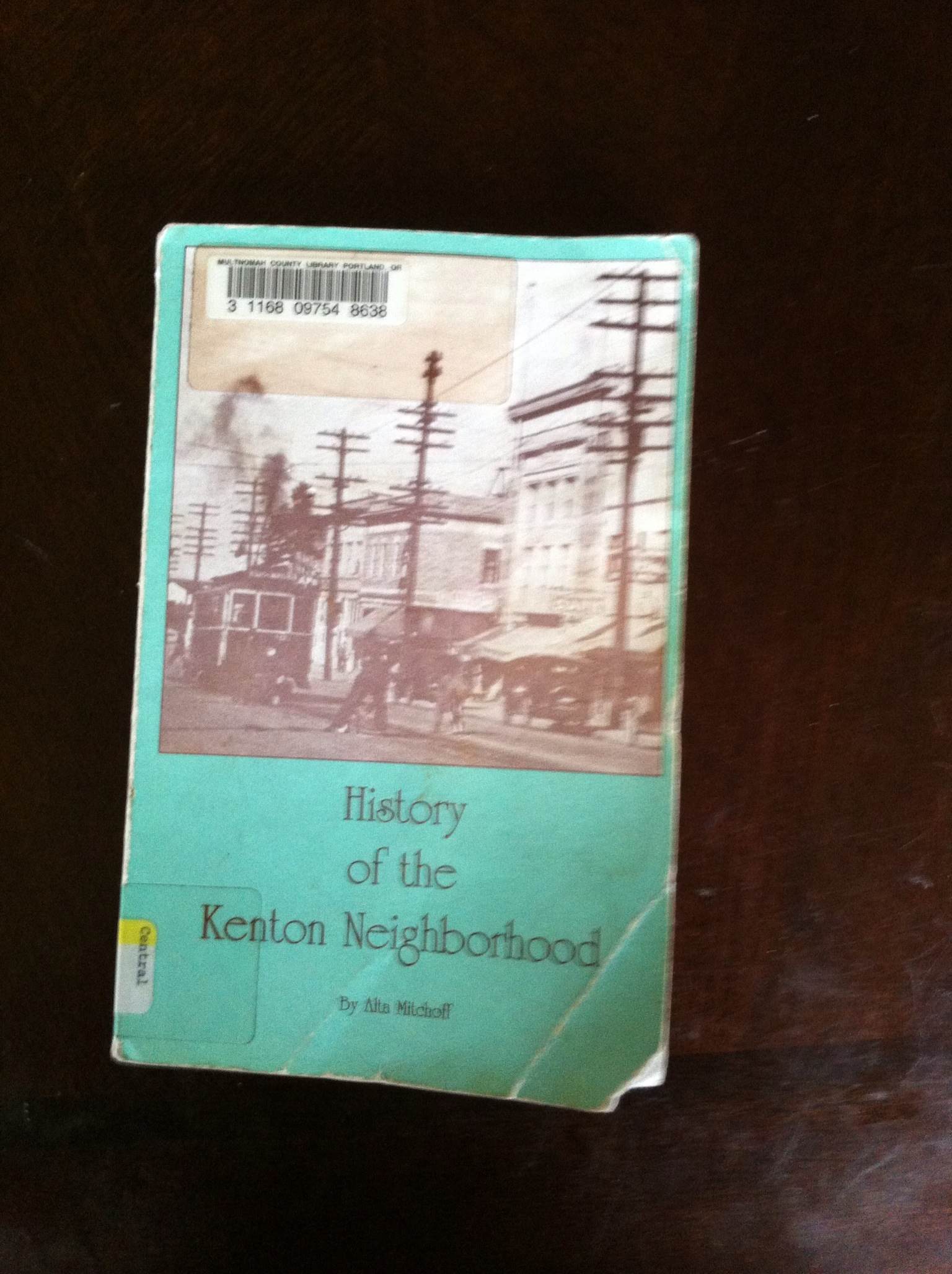
History of the Kenton Neighborhood did indeed have a chapter on Vanport. However, the text felt a tad familiar. Here’s the opening paragraph from Manly Maben’s book (click it to enlarge):
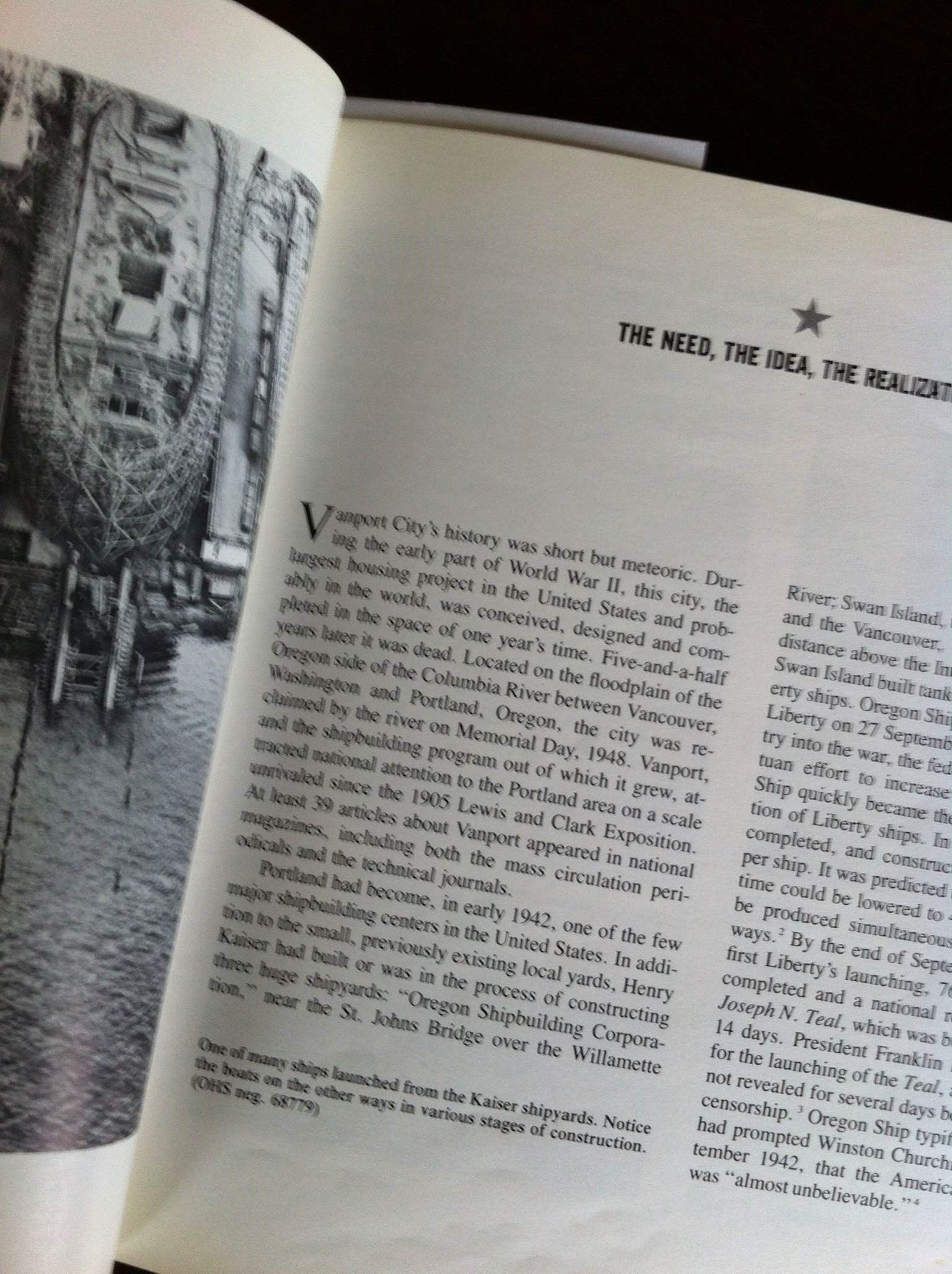
And here’s the Vanport section from the book on Kenton: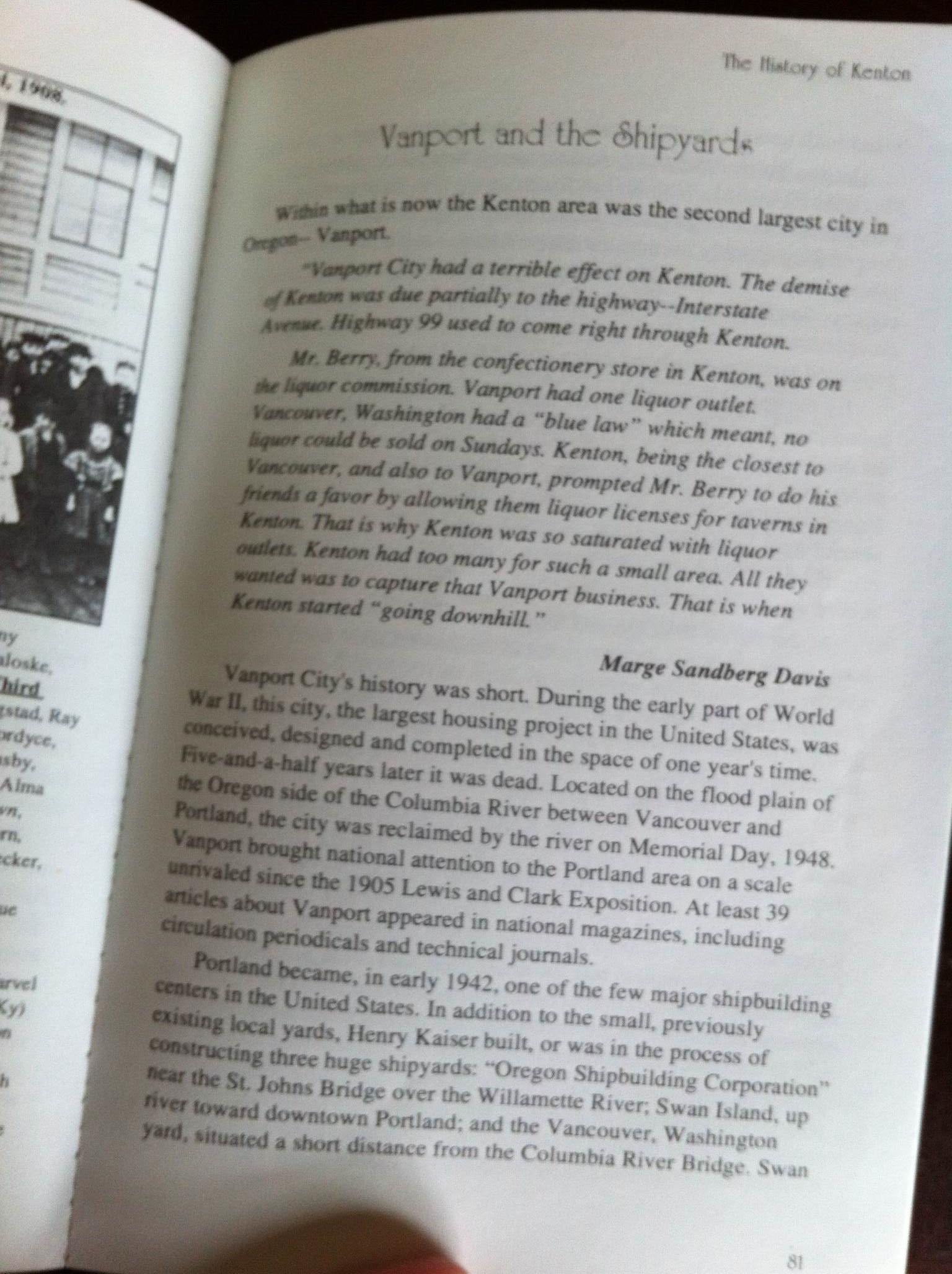
History of the Kenton Neighborhood, published in the late 1990s, copied from Manly Maben’s Vanport, which preceded it by about a decade. I read the section a few times and found that pretty much all of it was just lifted from the other book. I was shocked to see something so blatant, shameless, and obvious.
I didn’t know what to do. I thought, for a ridiculous moment, that I should go up to a librarian and say “pardon me, but this book in your Portland history section contains plagiarism,” however I doubt that would yield any kind of results. It’s not like I can go to the Writing Police and report author Alta Mitchoff as a plagiarist. I can’t take away her writing license.
I can do this, though. Alta Mitchoff, if you happen to be reading this (for some reason), I want to address you directly.
You are not a writer. You are not a historian. You are not a journalist, a chronicler, an interpreter of history, or a steward of culture. You took someone else’s work and copy-pasted it into your own crappy little neighborhood history book, and put your name on the cover. You’re a thief, Alta Mitchoff, and I caught you.
Some Proposed New Locations For Portlandia, America’s Second-Largest Hammered Copper Statue
In Portland on January 6, 2014 at 9:44 amPortland’s beloved Portland building is in trouble! The postmodern structure (designed by renowned Target employee Michael Graves) needs $95 million in repairs according to the Oregonian. That’s a lot of money, guys! It’s very possible that the world’s first ever (FIRST EVER) postmodern office building is going to get wrecking ball’ed away sometime soon, and that’s a shame. But if it does, there’s an important part of it we really should save.
You probably already know this, but the Portland Building has a pretty cool statue on it.
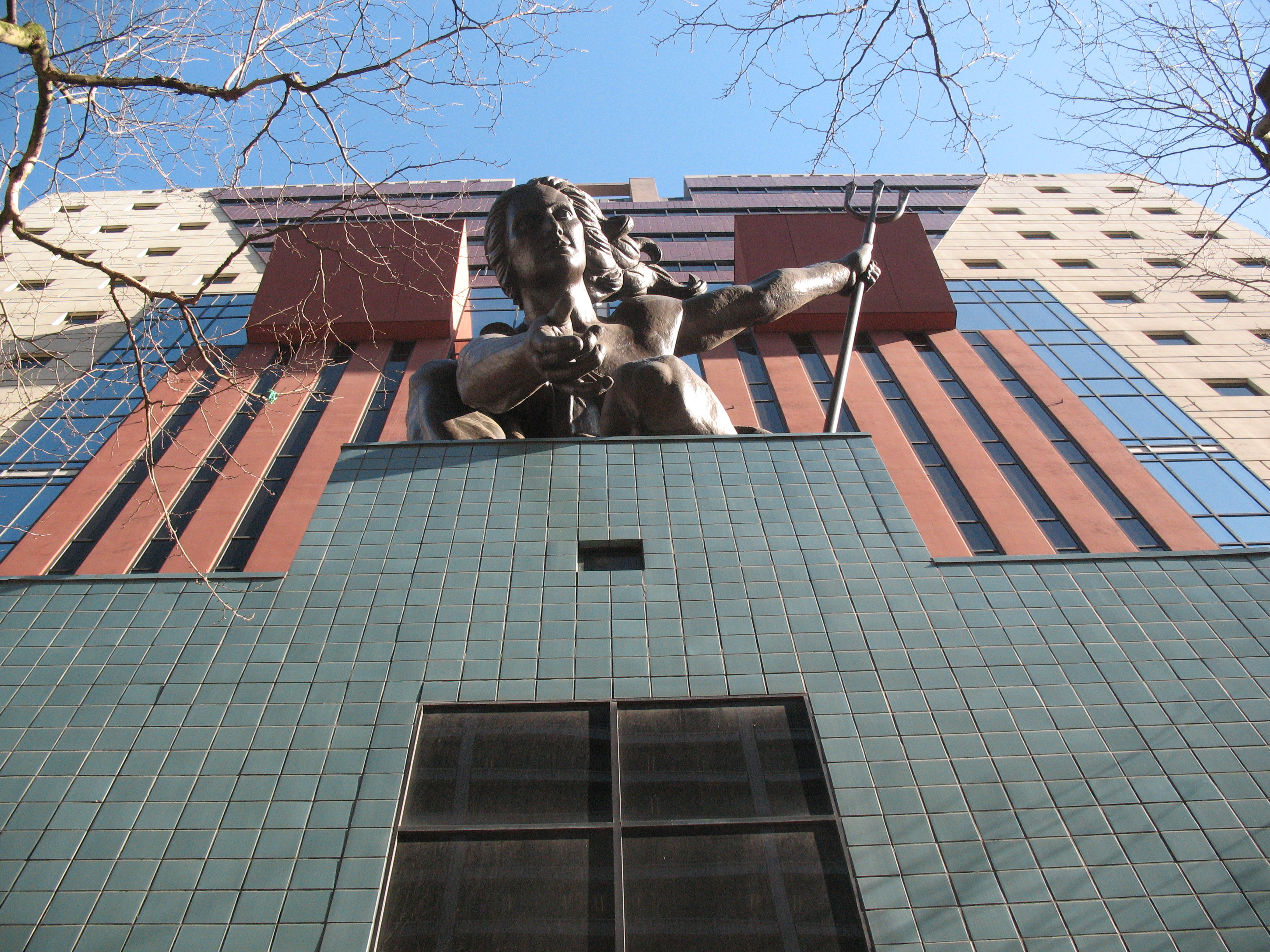
Portlandia!
Portlandia is made out of hammered copper (just like the Statue of Liberty!) she’s a lady statue (just like Liberty!) and is wearing a robe toga (remind you of any iconic American statuary? I think so). Also, just like Liberty is an iconic and instantly recognizable symbol of New York, freedom, and pretty good pizza, the mere sight of Portlandia reminds everyone of food carts and tasty coffee coffee. She is nationally known as a symbol of our town. She is our Space Needle, our Golden Gate, our Wall Drug. Everyone has taken the time to hang out on Fifth and go “ooh” at the big statue.
Everyone who moves to or visits Portland does that. Everyone.
We need to preserve this iconic, instantly-recognizable treasure even as the Portland building meets its end. Portlandia, my friends, needs a new home.
Powell’s
You know who goes to the Portland building on a regular basis? Water bureau employees! You know who goes to Powell’s on a regular basis? Water bureau employees and also everyone else. Right now only a few lucky civil servants get to look at Portlandia when they go to work, but if she was at Powell’s (like above the big sign on tenth and Burnside) everyone in town would see her when to go to pick up the new James Patterson novel.
On top of Big Pink
The U.S. Bancorp Tower (or “Big Pink”) is not the tallest building in Portland. The Wells Fargo Center is, by less than ten feet. That doesn’t seem right to me. Does it seem right to you? No. Okay then. But, a lot of people think it is and it’s a prettier building and it really should be taller. If we were to put Portlandia on top of Portland’s biggest, pinkest building, Big Pinkie would have a few extra feet of elevation and beat out the boring old Wells Fargo Center by a trident. One Portland icon would help out another! Everyone wins.
On stage at Mary’s Club
Mary’s Club is Portland’s oldest strip club. It’s an institution! Portlandia is a lady and she’s wearing a toga robe that is certainly not a complete set of clothes. She would fit right in with the other ladies who are also not wearing complete sets of clothes, and instead of a pole the dancers could use her trident. Everyone who dances at Mary’s would have a big, metallic dance partner! Don’t you want a big, metallic dance partner? I do.
In Front of The Original Hotcake House on Powell
So, this is a kind of private thing to admit here, but I’ve gone out with my friends and consumed alcohol one or two times. Sometimes when those evenings go really, really late we’ve ended up at the Original Hotcake House on Powell, because it’s open 24 hours and after you’ve had too many Old Crows a pancake or two can can totally hit the spot. Sometimes I get sort of moody on nights like that and wonder if going out and obliterating myself with Old Crow after Old Crow is really the best way to spend my life. I wonder if I could have just stayed in and read a book or knitted a cat sweater. Even though I’m with my friends on the nights when we end up at the Original Hotcake House on Powell, it’s lonely. Lonely on the inside. I’m having a really hard time with this idea, but I hope you sort of understand.
On nights like that nothing would comfort me more than a towering monument to civic pride. My friends and I would pull up to the Original Hotcake House on Powell, and Portlandia would be right there, a symbol of strength steadfastness. My life might be a mess, and I will always regret the books I didn’t read and the cat sweaters I didn’t knit, but Portlandia is there. She is strong. She is strong enough for all of us.
Above the main entrance of the SE Hawthorne New Season
This one time I was in the SE Hawthorne New Seasons and an employee talked to this lady who wasn’t wearing shoes. He was very polite and said that he was really sorry, but because New Seasons was a food place people had to wear shoes there. The lady said that was okay and no problem and she was just leaving anyway. Everything was totally cool a no one used bad words. That spirit of openness and communication is precisely the kind of thing represented by a giant statue reaching down and making a beckoning gesture, welcoming to Portland ships, travelers, and Californians who want to live here.
Kern Park
Kern Park is named after kerning, the practice spacing letters in fonts so they line up right when you turn them into words. Portland has a park named after kerning! Isn’t that quirky? Keep Portland Weird! I think we should put Portlandia here because Kern Park is near my house.
Those are my ideas! Where do you think we should put Portlandia?
2013: That Went Well
In Year in Review on December 31, 2013 at 9:03 am2013 was as good. Not life-alteringly amazing. Not transcendentally awesome. But good. At the end of every year I wish that I’d done more, but honestly this one was solid, both in terms of professional and personal events. Some highlights:
Genetic hybrids, everywhere!
Earlier this month I attended a party with several college friends whom I don’t get to see very often. It was nice catching up with people and I had an entirely pleasant time, but this gathering was different than previous meetups of its type. This time, most of the attendees had brought something extra with them, and virtually every surface of the house we were in was covered in babies. Tons of babies. Babies were everywhere. Walking ones. Nonwalking ones. Loud ones. Sleeping ones. Recently (but especially in the past year) several of my friends have created genetic hybrids of themselves. At the shindig in question, this reality was highly apparent, and felt that I had to look before stepping, lest I trod on someone’s offspring.
Not present at the gathering was the infant closest to me, my baby niece. Earlier this year my little sister gave birth to a baby girl, instantly turning my parents into old people and my brothers and I into uncles.
I do not have children, and the idea of parenthood frightens me. My peers who are now parents seem to prioritize their children’s happiness above most other things, and as much as I appreciate love and compassion, I’m very scared of that level of implied self-abnegation. Devotion to a child seems to entail giving up your own life. I do not dislike children, and it is probable that I will have one or two of my own. However, I would like to be slightly more established before that happens, especially financially. Even though I’m thirty-three, I’m still much too chaotic ungrownuplike to be a dad. Or maybe that’s what I tell myself to justify my continued nonreproduction.
I did on-the-street interviews. With street people.
Of all of the writing I did this year I was most proud of my September 25 Mercury feature where I interviewed panhandlers about their income, spending, and lifestyle habits. It was a difficult piece to research, and I learned a good deal about homelessness, poverty, and what daily life is like for people struggling with it. I would like to think that I have more empathy and understanding for poor people now than I did at the start of the year, and now more than ever I realize that the poor people are not a problem. Poverty is a problem. That important distinction seems avoided all too often.
Probably my second favorite thing from this year was a piece way back in January about Portland’s street grid. Portland’s street platting was a nerdy obsession of mine, and I was pleased that my editors allowed me to spend 2,000 words of newsprint on it.
I yelled at people in bars. And at a game convention. And over the Internet.
I talk to people for a living. During my day job as a tour guide I dazzle visitors to Portland with interesting local facts, like how Portland was incorporated in 1851. Wasn’t that interesting? Yes it was. Now tip me. I’ve gotten very good at this whole “research a thing and then talk about it” deal, and I now have a regular gig as part of Stumptown Stories, a lecture series that focuses primarily on Portland and Oregon history. This past year I’ve done lectures on unsolved crimes, local booze, bad mayors, cool buildings, and labor agitators. In October I got to be a guest at the Portand Retro Gaming Expo to talk about Polybius (our fair city’s mythical killer video game), and I’m attempting to run a general-interest trivia podcast. That last project needs a bit more attention, but on the whole public speaking for fun and profit is going decently well.
Pain! Gain! Feeling of the burn!
My relationship with exercise has been a spotty one. I was a distance runner back in high school, did fencing and aikido in college, and I ride my bike every day, but I’ve never been all that obsessive or orderly about taking care of the hair-strewn meat robot that is my body. As of this year, though, I live with an amazonian kung-fu roller derby badass ninja woman who could kill me with her pinkie (I love you, Sarah!) and a bit of her enthusiasm for exercise has rubbed off on me. Because of Sarah I’ve been running, working out, and doing Healthy Person Things on a regular basis. This past September we did the Warrior Dash (which was a lot of fun, though not as difficult as it’s billed to be) and we’ll likely do some ridiculous fitness event again next year.
Exercise is not unpleasant. In fact, I’ve come to sort of enjoy the pain and aches that come with it. It is a good pain. It’s a pain that says “I accomplished something and am superficially similar to the Incredible Hulk.”
Sin! I live in it now.
Lastly, I moved in with my girlfriend Sarah this year. I was scared to do it. The only other time I’ve lived with a partner, it did not go well, and I was worried that if Sarah and I had to see each other on a regular basis we’d just start resenting each other and get bored. At the time, we’d been together for just over two very good years, and I was worried that cohabitation would make us boring. That has not happened. At all. In fact, living with her has been way better than what we had before insofar as we now don’t have to worry about the various logistics that come with dividing your time between two residences. Of everything that’s happened this year, moving in with someone I love has easily been the best development. Sarah, this past year with you has been wonderful. Here’s to many, many more.